


EquiTex — a textile surface that needs no watering
Quartz sand bound with textile fibre. One premise: it has to work all year round, without sprinklers and without daily levelling.
EquiTex is textile offcuts from industrial production — not shredded used carpets. No polyurethane foam and no hard carpet backing, which in cheaper substitutes delaminate after a few seasons. We have been using it for twenty years, in indoor arenas and on outdoor arenas.
Price your surface online Ask an expert
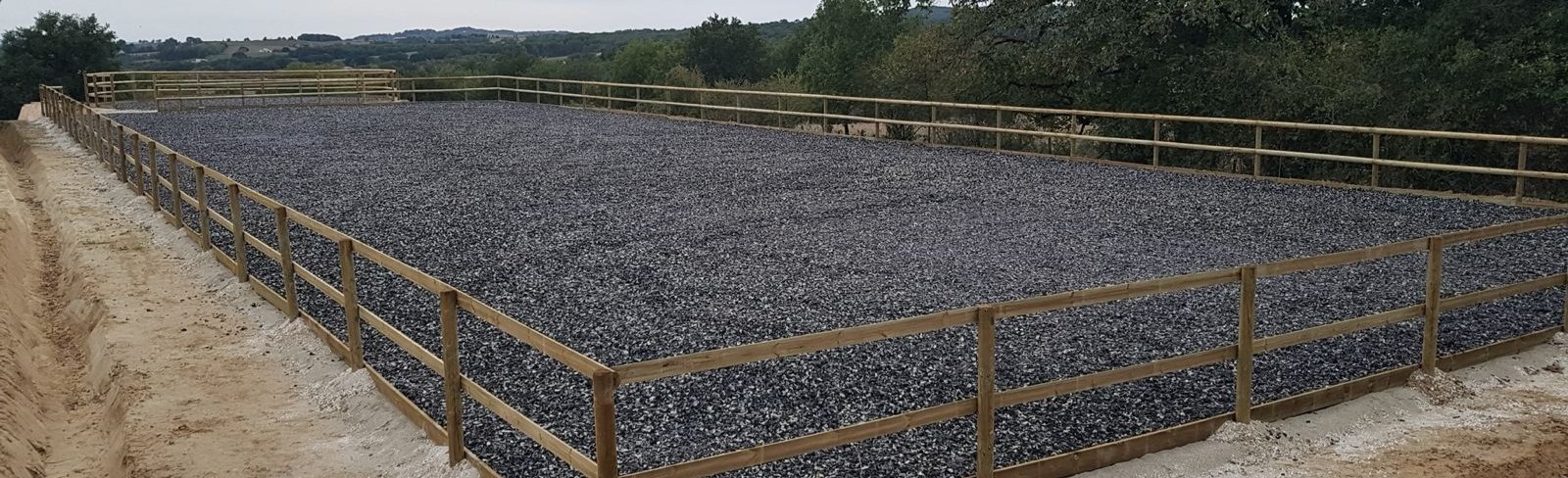
Why it works
Fibre instead of water
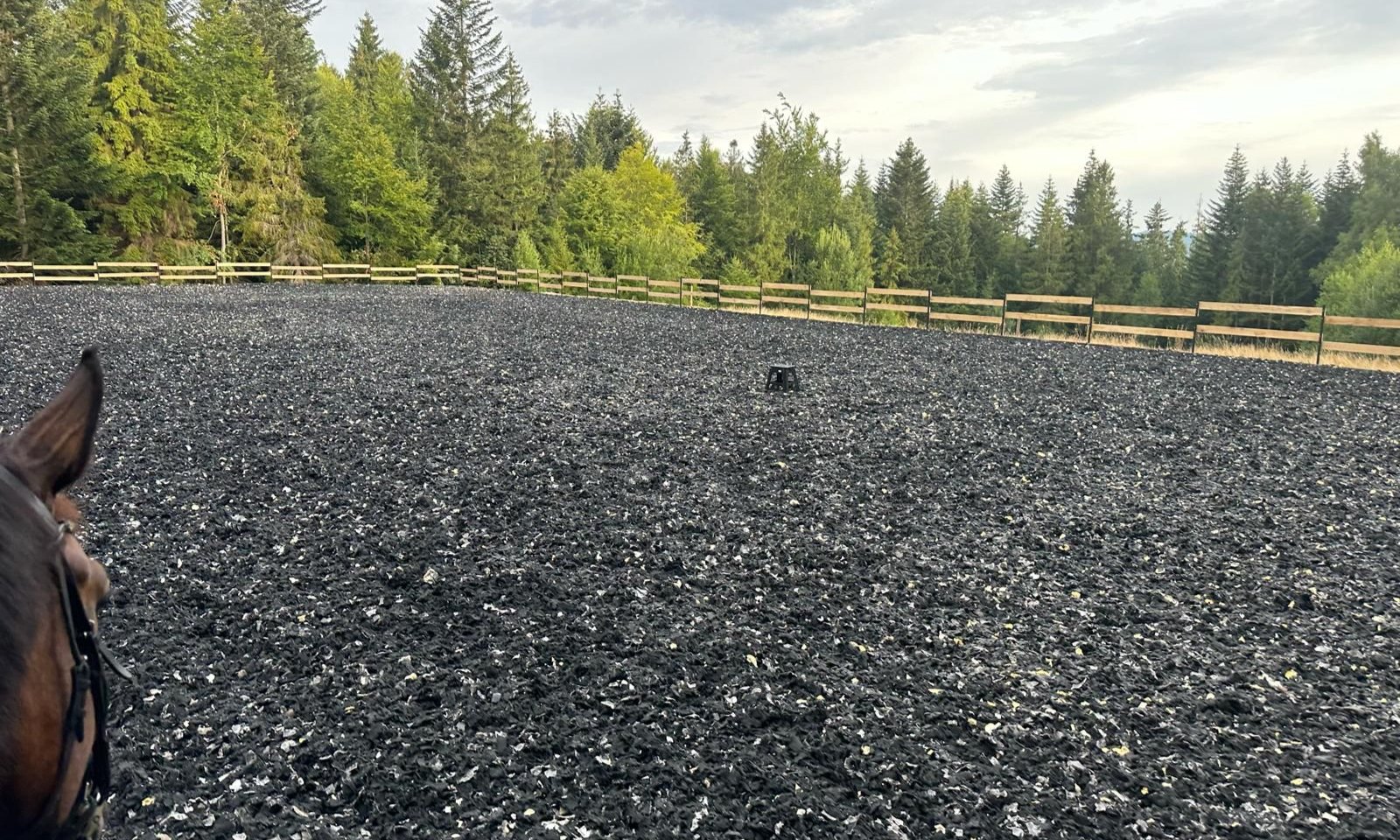
The textile fibre binds the grains of sand and retains moisture. The surface does not dust and does not blow away with every gust.
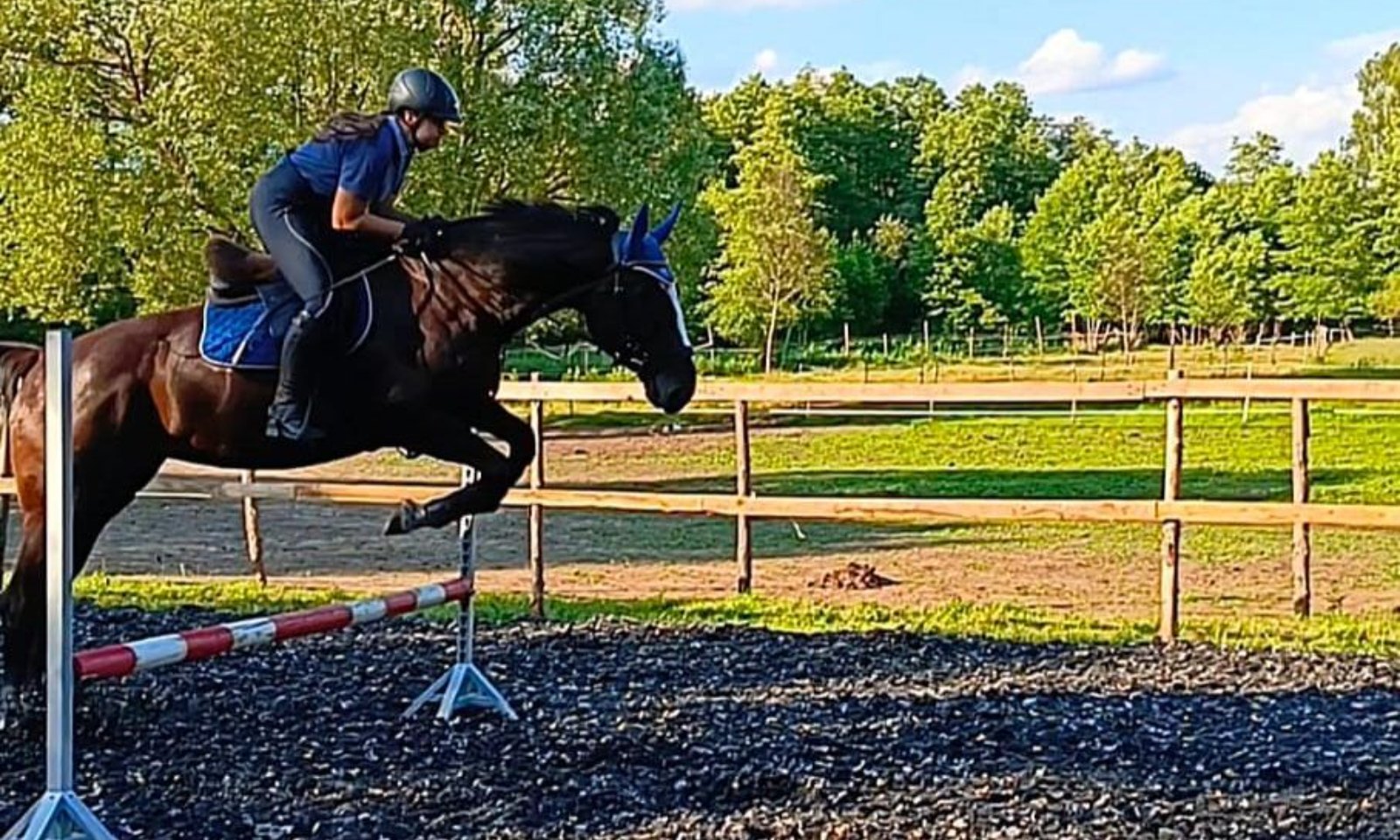
Constant elasticity
The layer does not compact the way sand alone does, so the rebound is consistent whatever the time of day or the weather.
No irrigation system
There is no need to install sprinklers or drain them down for winter. That is a saving at the investment stage, not only in operation.
Frost resistance
The layer does not freeze into lumps at sub-zero temperatures. Indoor and outdoor arenas work all year round.
Minimal maintenance
Instead of daily levelling — periodic mixing of the layer. An arena leveller is still useful, but works far less often.
A material, not waste
EquiTex is not waste within the meaning of the Polish Waste Act. This matters for acceptance inspections and for public-sector projects.
The sub-base — everything depends on it
The most common cause of complaints about a textile surface is a badly built sub-base, not the material itself. That is why we include instructions and an acceptance checklist with every delivery.
The decisive criterion: a sub-base load-bearing capacity of at least 40 kN/m². The thickness of the aggregate layer is chosen to suit the ground, not the budget.
| Native ground | Aggregate layer | Notes |
|---|---|---|
| Load-bearing sand or gravel | 10–15 cm | The simplest case. |
| Mixed ground | 20 cm | The standard solution in most locations. |
| Clay, silt, wet ground | 30 cm | Plus 200 g/m² geotextile under the aggregate. |
| Peat, made ground | per report | A geotechnical report is required — we do not guess. |
If in doubt, we assume 30 cm. Excavation is carried out to a depth equal to the thickness of the aggregate.
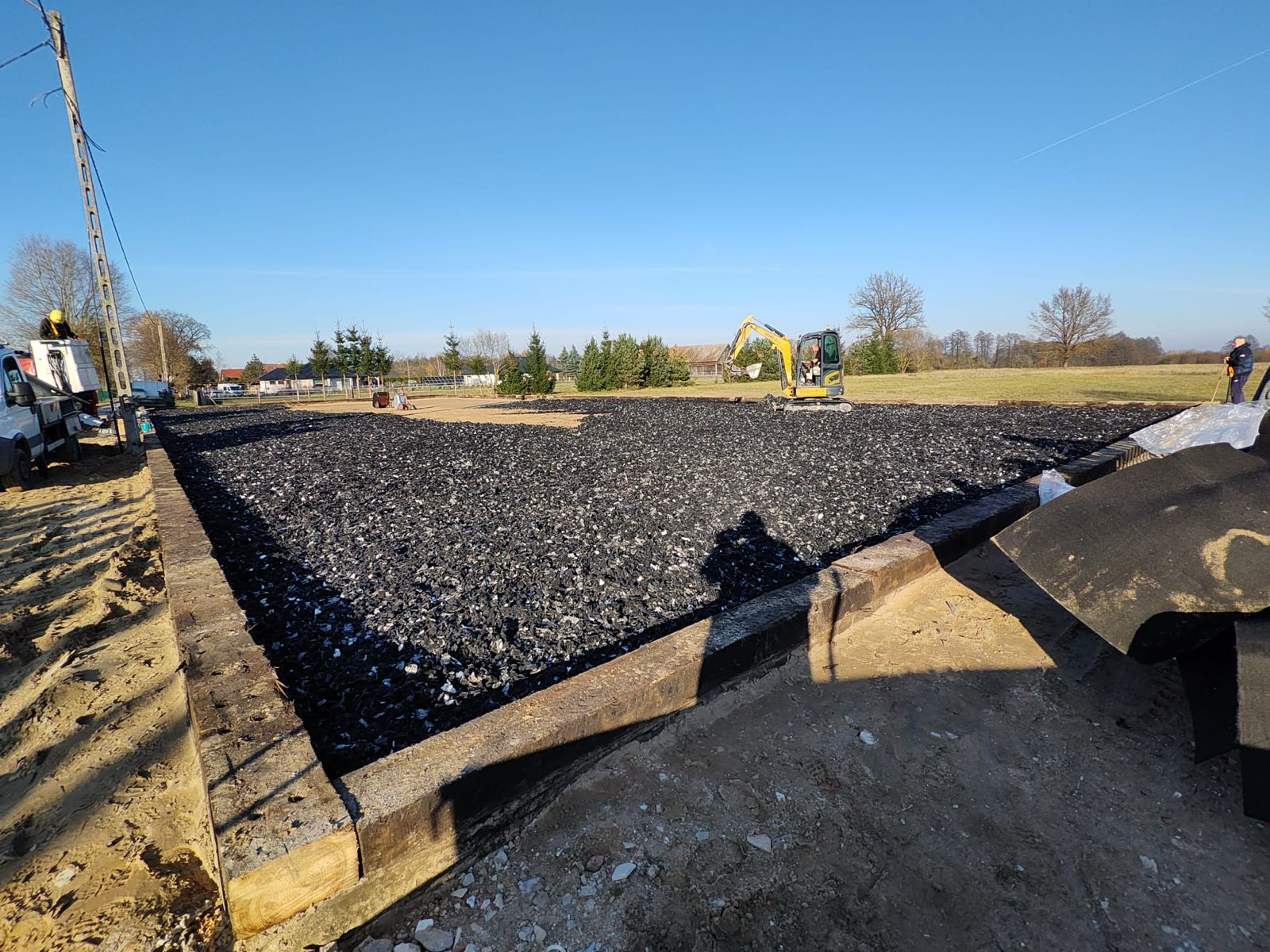
Three variants, three sets of parameters
| Facility | EquiTex layer | Fall | Drainage |
|---|---|---|---|
| Indoor arena | 15 cm | None; for an open-sided arena 0.5% towards the entrance. | Usually unnecessary. |
| Outdoor arena | 15 cm | 1% towards the short side — over 40 m that gives a 40 cm difference. | Above 800 m². For 20 × 40 m about 80 linear metres: two runs 10 m apart plus a collector. |
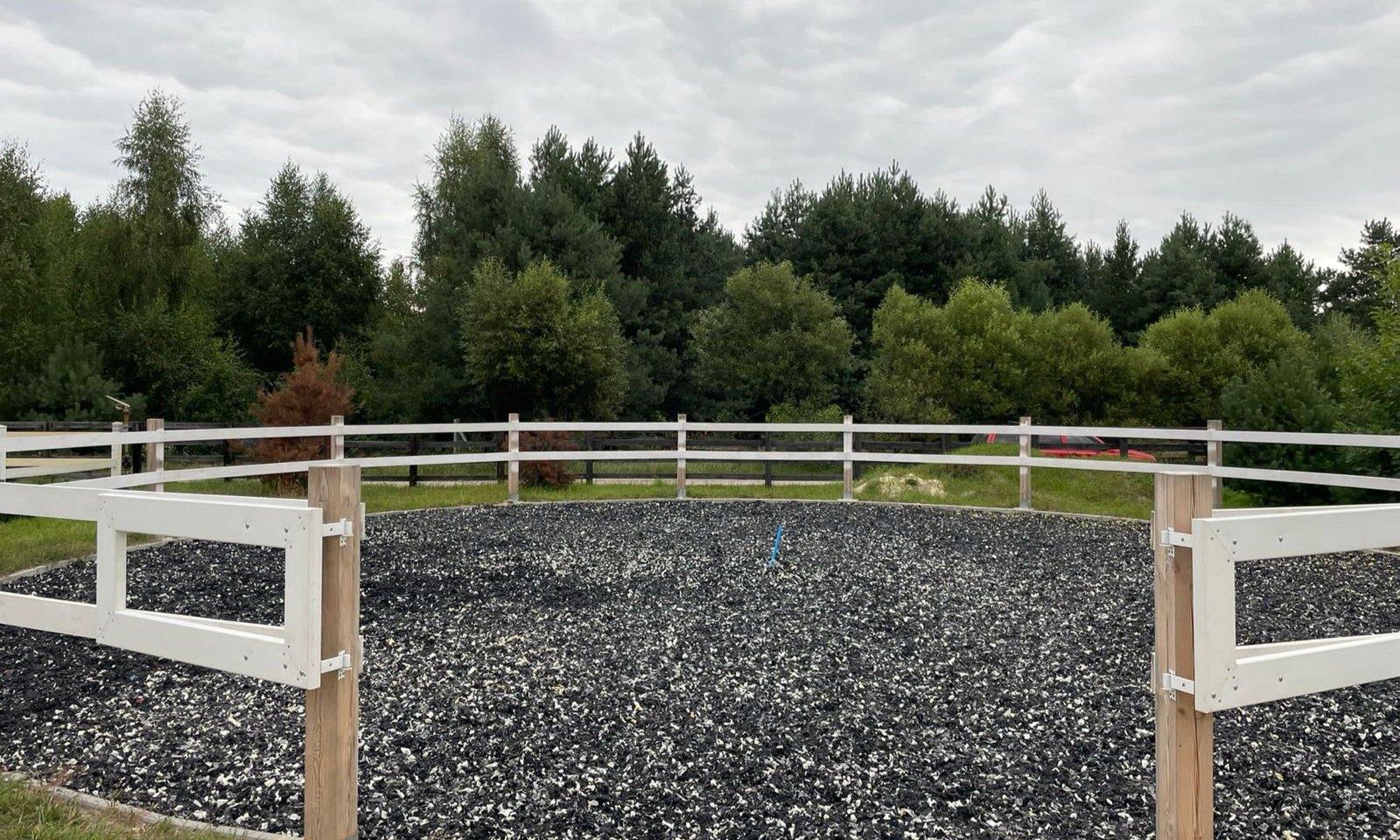
| Lunge pen | 12 cm | Crowned, 1% from the centre outwards. | None — water runs off down the fall beyond the circle. |
Why 12 cm in a lunge pen and not 15: the layer is firmer, moves less under the narrow circular track and puts less strain on the tendons. We do not go below 12 cm.
We say this plainly: for a lunge pen in use for more than four hours a day we recommend getting in touch before you buy, and perforated mats laid on the finished sub-base, beneath the surface layer. The mats spread the load from the narrow track. Selection is individual — the minimum lunge pen diameter is 15 m.
How much material and how it arrives
| Item | Value |
|---|---|
| EquiTex consumption | 2.0 kg/m² for every 1 cm of layer. At 15 cm that is 30 kg/m², at 12 cm — 24 kg/m². |
| Aggregate consumption | tonnes = area [m²] × thickness [cm] × 0.015 |
| Lead time | 4 weeks from order. |
| Transport | 40 t lorry, payload 18–25 t per trip. Shrink-wrapped pallets of 400–800 kg. |
| Unloading | By the customer; 2 hours allowed per trip. |
Commissioning and use
After spreading, the layer is watered and rolled once — this is a commissioning step, not part of maintenance. After that the surface is not watered; it is one of the items on the ‘what not to do’ list in the instructions. In use, periodic mixing of the layer is enough.
Instructions to download
Full EquiTex technical documentation — the sub-base layer by layer, choosing the aggregate thickness, quantities of material to order and an acceptance checklist. PDF files, no details required.
EquiTex — sub-base instructions: indoor arena
Excavation and 10–30 cm of aggregate chosen to suit the ground, load-bearing capacity min. 40 kN/m², 15 cm EquiTex layer, unloading, commissioning, maintenance, material data sheet, FAQ and acceptance checklist. 11 pages.
EquiTex — sub-base instructions: outdoor arena
The same as for the indoor arena plus a 1% fall towards the short side and drainage for areas above 800 m². Material conversion factors and an acceptance checklist. 12 pages.
Price your surface
The configurator asks for the dimensions, the type of facility and the postcode, and then gives an indicative cost of material with delivery. We include sub-base instructions and an acceptance checklist with every project.
Frequently asked questions
Does EquiTex need watering?
No. The textile fibre retains moisture in the layer, so the surface does not dust without sprinkling. Watering and rolling are done once, at commissioning.
How often does it need levelling?
Far less often than quartz sand. Instead of daily levelling, periodic mixing of the layer is enough. The frequency depends on the intensity of use.
How does it differ from cheaper substitutes?
In its composition. EquiTex is textile offcuts from industrial production. Cheaper substitutes are sometimes shredded used carpets — with polyurethane foam and a hard backing that delaminate after a few seasons.
Is it suitable for an outdoor arena?
Yes. It is frost-resistant and does not blow away like dry sand. Outdoors, what matters is correct construction of the 1% fall and of drainage above 800 m².
Can EquiTex be laid on an existing surface?
It depends on what is underneath. If the sub-base is load-bearing, level and meets the 40 kN/m² criterion — yes, once the old riding layer has been removed. We always inspect the facility or ask for photos and measurements.
See EquiTex at work
The film shows how the surface behaves under the hoof and what it looks like after rain.
