


Manure removal — Central Manure System
Mucking out loose boxes with a fork and wheelbarrow is the heaviest and longest job in a stable. The Central Manure System (CES) removes manure by vacuum: there is a drop hatch at every box, the manure falls into the pipeline and travels to the central unit by the muck pad. The member of staff does not carry it a single metre.
It is a permanent installation and is planned together with the stable structure — the pipeline runs along the walls of the boxes, and the unit stands outside, at the discharge point. If the stable is already standing and you are not planning alterations, at the bottom of this page we describe the portable option: the Easy Manure Cleaner.
Get a quote online Ask an expert

Three questions we start with
| How many boxes and in what layout? | The number of hatches and the length of the pipeline are the two main items in the quote. A two-row stable uses less pipe than several scattered buildings. |
| Where will the muck pad be? | The central unit has to stand at the discharge point, and the distance from the stable to the pad counts towards the suction route. The route has a hard limit of 200 m. |
| What stage is the build at? | Wall penetrations and the pipeline route are settled before the floor slab is poured. Once the shell is closed, every change costs many times more. |
How the central system works
A pipeline routed along the walls of the boxes, a drop hatch at every box and one central unit generating the vacuum. Manure and bedding go into the hatch and travel away through the pipe — no wheelbarrow, no trips along the aisle, no reloading at the pad.
Vacuum transport
The pipeline is under vacuum generated by the central unit. The draw does not weaken with the length of the route, so the last box is served just as strongly as the first.
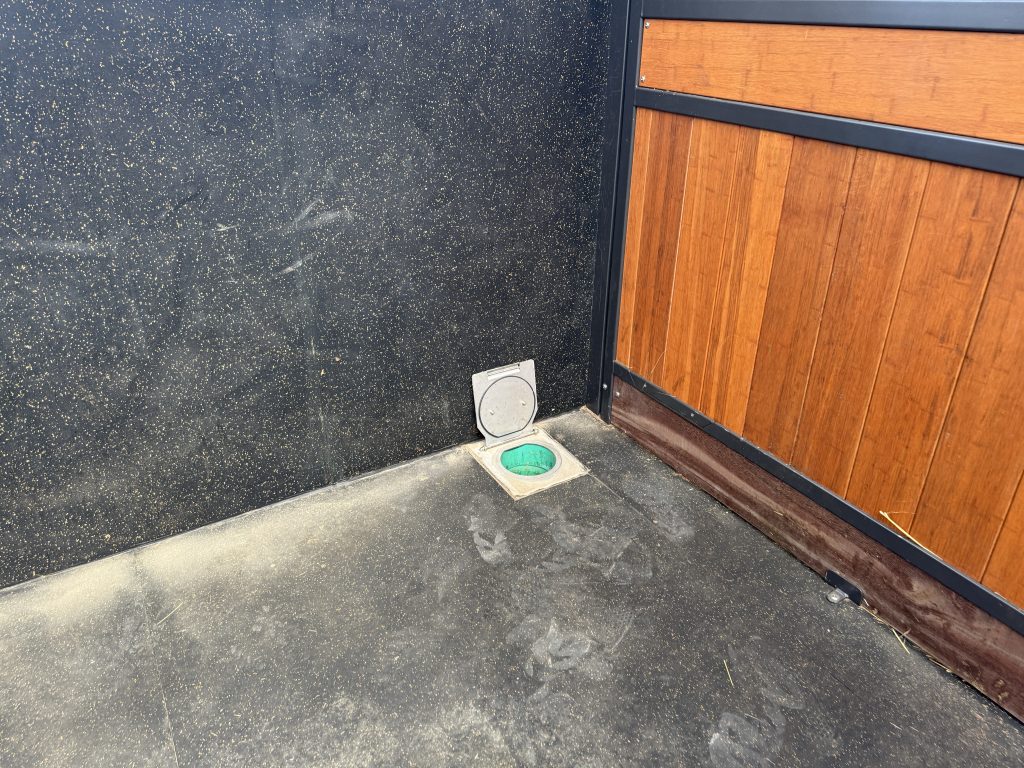
Drop hatch at the box
In every box there is a hatch by the wall, with a short connector to the pipe. The cover lies flush with the floor, does not get in the horse's way and does not collect bedding.
Pipeline with no right angles
One run per row of boxes; the two meet beyond the gable end of the stable at a 45-degree angle. A right angle is where manure starts to build up — which is why there are none.
Sound-insulated central unit
The extraction fan works in a noise-damping housing. A 30 kW motor serves a route of up to 100 m, 35 kW up to 200 m. The unit stands outside, by the pad.
Cyclone separation
The cyclone separates the manure from the air and traps the dust, and the hopper drops the material straight onto the pad. The system is closed, so no dust hangs in the stable.
Control and servicing
Control cabinet with panel, air-conditioned modular switchboard and a safe service platform with ladder and guard rail. The installation complies with EU directives.
Optionally the installation ends with a manure distributor — rotary or linear. The discharge is then spread evenly over the pad or in a container and does not need levelling with a loader.


What the installation consists of
| Stage I — installation in the stable | Drop hatches (one per box), pipeline along the walls of the boxes, cabling and sensor leads, installation. |
| Stage II — central unit | Extraction fan with a 30 or 35 kW motor, control cabinet with panel, cabling, installation and commissioning. |
| Platform with separator | A two-column structure above the pad: cyclone with hopper, ladder and service walkway with guard rail. |
| Manure distributor | Option: rotary or linear. Spreads the discharge evenly over the pad or in a container; it can be omitted. |
| Design and coordination | The design team sees the job through from the stable plan to handover: pipeline route, penetrations, position of the unit and power supply. |
What shapes the budget
| Number of boxes | Each box means one hatch and a few metres of pipe — this item rises in direct proportion to the size of the stable. |
| Route and its length | It is not just the length inside the stable that counts, but also the section to the discharge point. A shorter route to the pad means a cheaper installation and a smaller motor. |
| Unit power | 30 kW for a route of up to 100 m, 35 kW up to 200 m. Above 200 m the facility is divided into two independent installations. |
| Discharge equipment | The platform with separator is fixed; the manure distributor is a choice — rotary, linear or none. |
| Installation and transport | Installation and commissioning are included in the price of the system. We price transport individually, depending on the location of the site. |
When a central system does not pay off: with a dozen or so horses in a stable that is already standing, the cost of the pipeline, penetrations and work on the floor rarely pays for itself — it is more honest then to take the portable option at the bottom of this page. Plan a central installation before the floor slab is poured: added to a finished building it always costs more than when it is provided for in the design. See also building a stable.
Let's put real figures on it
The configurator will give a price range for your number of boxes in a few minutes — without a conversation and without leaving your details. If you would rather talk, we are on the phone.
See how it works
The film shows the Central Manure System at work — manure dropped at the box and carried by pipe to the central unit.
Easy Manure Cleaner — the portable option
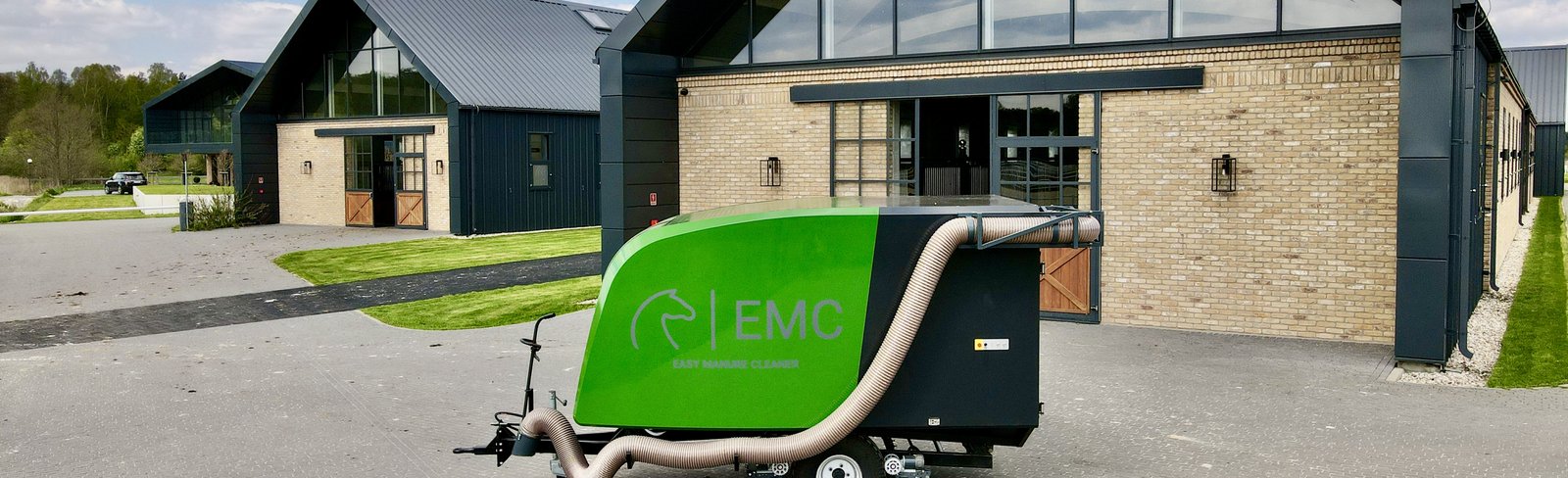
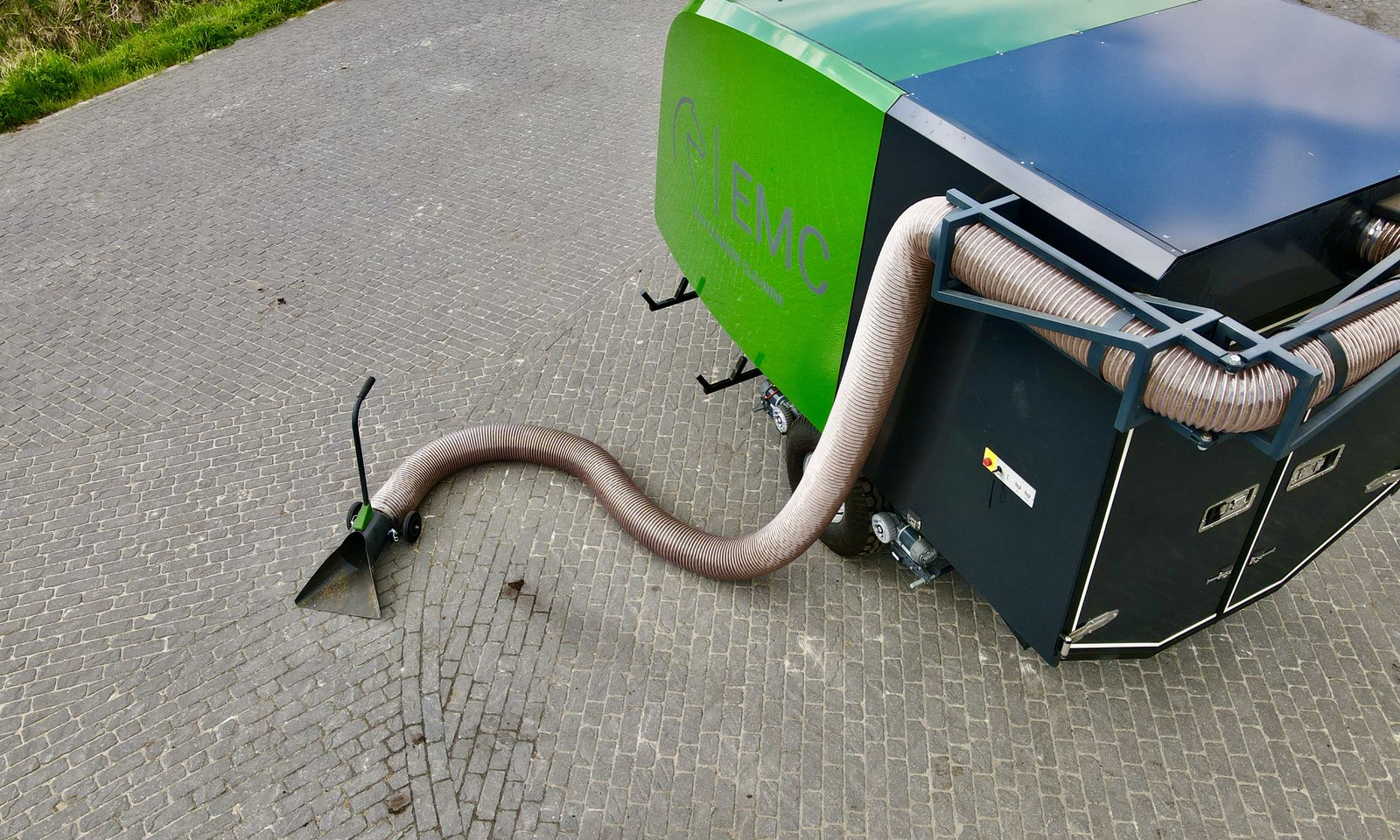
If the stable is already standing and you are not planning to break up the floor, a portable machine gives the same result. An electric suction vehicle drives up to the box, you take the nozzle and vacuum up the manure together with the bedding — no wheelbarrow and no installation in the building at all.
Zero building work
No need to break through walls or run pipes. The machine drives into an existing stable and works from day one. It is the fastest route to automation in a building that is already standing.
Electric drive
A 5 kW motor powered by a 10.5 kWh battery. Up to two hours of continuous work on a single charge. Quiet — horses in neighbouring boxes do not react.
One pass, the whole stable
A 6.2 m³ tank and a 3.5 t payload. With a typical number of horses you muck out all the boxes without emptying once along the way.
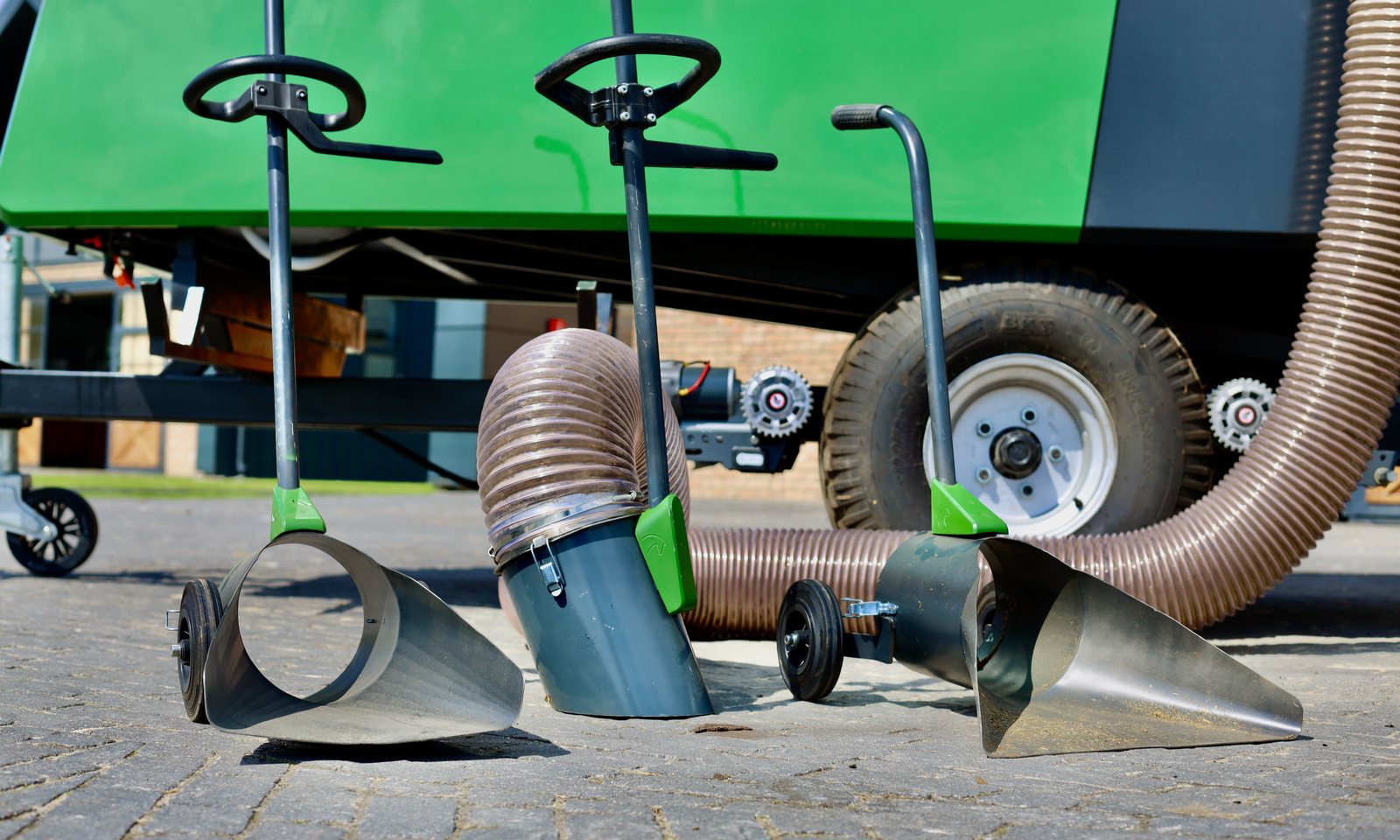
Three nozzles for three jobs
Buffalo — the largest, for raking manure with a fork straight into the suction. Snake — medium-sized and precise, works like a vacuum cleaner. Elephant — the smallest, for cleaning up remnants and scraps.
6-metre reach
The hose reaches every corner of the box without driving inside. The horse does not have to leave while you muck out.
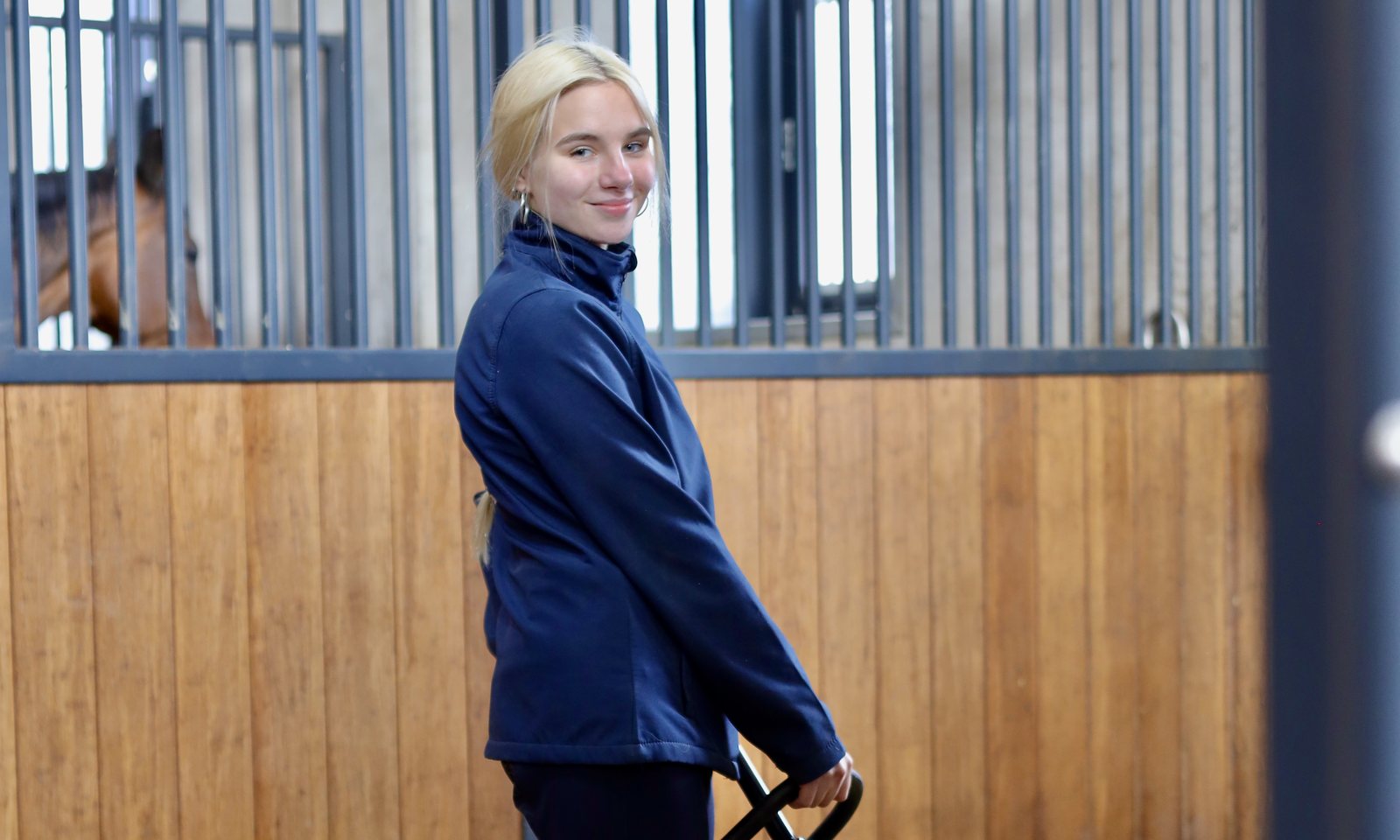
Less work, fewer injuries
The worker's back does not have to haul a wheelbarrow dozens of times a day. In a large yard this argument translates directly into staff turnover.
Which system for which stable
| Easy Manure Cleaner | Central Manure System | |
|---|---|---|
| Type of solution | Portable suction vehicle | Permanent pipe installation |
| Building work | None | Pipeline in the stable, penetrations, space for the unit by the pad |
| Best for | An existing stable, without alterations | New builds and major refurbishments |
| Number of horses | Up to several dozen horses | No upper limit — a scalable system |
| Power supply | 10.5 kWh battery, 5 kW motor | Permanent power supply, modular switchboard |
| Manure transport | Into the 6.2 m³ tank in the machine | By pipe straight onto the pad or into a container |
| Dust | Limited | Closed system with cyclone filtration |
| Expansion | Another machine | Further sections and hatches |
Frequently asked questions
Can a central system be added to an existing stable?
It can, but it requires pipes to be run and a place prepared for the unit — that is building work. In a facility that is already operating, the portable option more often pays off.
How far from the stable can the central unit stand?
The suction route from the furthest hatch to the unit must not exceed 200 m — this is a hard limit of the system. Up to 100 m a 30 kW motor is enough; above that we specify 35 kW. Extensive facilities are divided into two independent installations.
What about dust?
The central system works in a closed circuit with cyclone separation, and the exhaust air leaves the stable. This is its greatest advantage over mucking out with a fork, which raises dust with every movement.
Is a separate muck pad needed?
Yes, the manure still has to go somewhere. The central system can end in a 360° distributor that fills a container or the pad evenly.
Does the horse have to leave the box during mucking out?
No. The hose reach is 6 metres, so you work from the door. The machine is quiet; horses get used to it in a few days.
How many horses will one Easy Manure Cleaner handle?
With a 6.2 m³ tank and a 3.5 t payload, one machine mucks out a whole typical stable in one cycle, without emptying along the way. The practical limit is set by battery life — up to two hours of continuous suction.
Let's work out your stable
The configurator will give a price range for your number of boxes in a few minutes — without a conversation and without leaving your details. If you would rather talk, we are on the phone.
